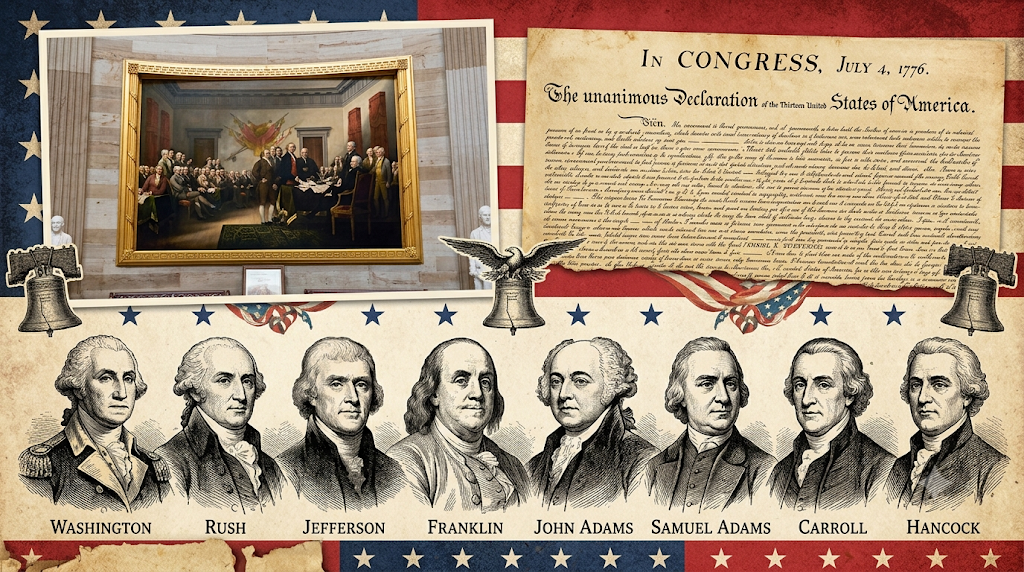
As a lifelong student of the fascinating stories of America’s legendary heroes, from the Pilgrims to the Patriots, I discovered an interesting intersection with Holy Scripture. Just as the Bible has its notable heroes of faith and God-given courage in the eleventh chapter of the Book of Hebrews in the Bible, so also does the history of America have its heroes of courage and faith in its God-given deliverance from tyranny. And both have had their detractors and skeptics. They continually try to steer generations of young students away from confidence in the truthful place of those heros in the record of Almighty God’s providence in His redemption of the human race.

Accusations to disparage the Founding Fathers are common in the world of fallen mankind. You’ve likely heard slanderous assertions that the Founding Fathers were a bunch of atheists, agnostics, and deists wanting a strict separation of church and state – nothing less than a secular government and a secular public with barely any Biblical values. While their charges are shamefully false, no one is suggesting that all the early American leaders were devoted Christians (though most of them were). The vast majority of Founding Fathers wrote openly, and often, about the influence of Christianity, the Bible and Jesus on their personal lives. You can learn more of the faith journey of the people we’re talking about in the resources noted in the transcript for today’s podcast, but let’s hear some actual quotes to get a glimpse of the thinking of these men.
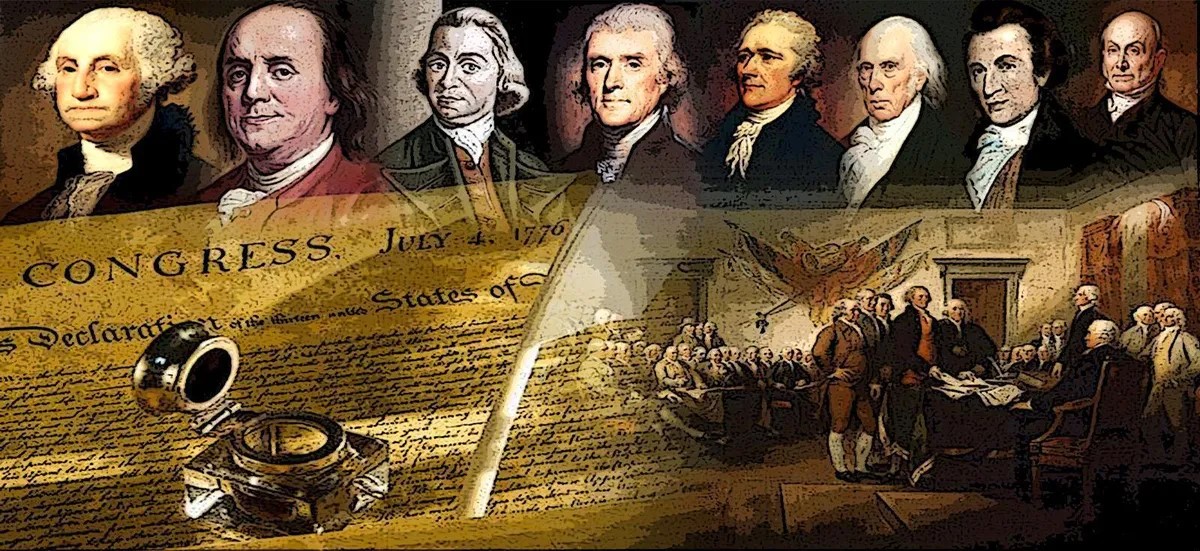
It’s now been over 250 years that the people of the American republic have enjoyed the blessings of being a free and self-governing nation. And it all began with the convictions of the Preamble of the Declaration of Independence. Have you heard those words lately? They were deeply believed by every single patriotic American in 1776. But, no matter how patriotic each one of us might sincerely think we are today, I have to humbly admit that there’s almost no way any of us today can fully grasp the sobering reality and risk those men faced.

Knowing what was written in that document, about to be made public the next day, John Adams wrote to his wife, Abigail that the date of the signing of the Declaration of Independence in July 1776 would become the most memorable date in American history. He expected it to be celebrated annually by future generations as a great anniversary festival and day of deliverance. He believed the holiday should be marked by solemn devotion to God and public festivities including pomp and parade, shows, games, sports, guns, bells, bonfires, and illuminations across the continent from this time forward forever more.

The devoutly Christian John Adams deeply believed that the founding generation of America sacrificed their prosperity, safety, and peace of mind deliberately for the purpose of establishing liberty in their land. Doing that was unquestionably a God-given blessing to his generation. But he also had a deep sense that there was a significant risk that unborn generations would take these privileges for granted. Adams feared that without a deep appreciation for the moral burden and hardships endured by his contemporaries, future Americans might fail to uphold the Constitution and the republican values they secured. He made it very clear that this sacrifice was not for any personal gain for any of the Founders. It was only to ensure that their sons and their descendants would have the liberty to pursue useful understanding of things like mathematics, philosophy, and the arts without the constant burden of war and political strife.

All 56 patriots who signed the Declaration took their duties so seriously to the people of the new nation that they made a promise “with a firm reliance on the protection of Divine Providence, we mutually pledge to each other our lives, our fortunes, and our sacred honor.” They signed the Declaration of Independence knowing that the penalty would be death if they were captured, and that pledge could literally cost them their lives and fortunes.

Like those times of ancient Israel, before the long age of their many kings, America… and our whole world really… has mirrored those generations when “everyone did what was right in his own eyes” (Judges 21:25). As a society, it seems to most ordinary folks, that the people in charge of the nations… the rulers, the princes, the governing bureaucrats, and people with influence in the halls of schools and churches alike… have partnered with the gatekeepers of hell. To the horror of honest men and women who are just trying to raise their families with some kind of common decency and respect for righteousness, we’ve wondered if common sense and sanity would ever return in our lifetimes.
Well… like the prophet Daniel wrote, the Most High God is in charge… “And He changes the times and the seasons; He removes kings and raises up kings; He gives wisdom to the wise and knowledge to those who have understanding” (Daniel 2:21).
Being human… every king that God has ever raised up … has flaws. Their knowledge is imperfect. They are all subject to being influenced by misguided counselors. They make mistakes… sometimes grievous mistakes. And that’s why God’s faithful people who love God and observe to do His commandments as best they know how (1 John 5:2-3), do “…not grow weary while doing good, for in due season we shall reap if we do not lose heart. Therefore, as we have opportunity, let us do good to all, especially to those who are of the household of faith” (Galatians 6:9-10). And never forget to “Pray for kings and all who are in authority…” Why? “…so that we can live peaceful and quiet lives marked by godliness and dignity” (1 Timothy 2:2).

Psalm 97:2 tells us that “…Righteousness and justice are the foundation of His throne.” He’s talking about the basis for all of His authority and dominion. It’s all based on that which is RIGHT and JUST. The implication couldn’t be clearer. If righteousness and justice are pre-eminent with God, that means that wrong doing and in-justice are the object of God’s absolute hatred. How should we respond to that?