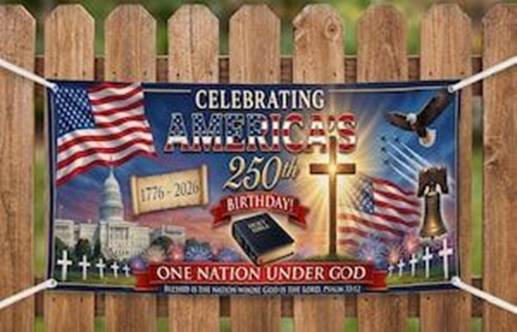
Did you ever hear the quote of John Adams, America’s first vice president with George Washington, predicting that the date of the celebration of America’s declaration of independence will be treated by future generations like a holiday celebration of deliverance from tyranny?
It’s now been over 250 years that the people of the American republic have enjoyed the blessings of being a free and self-governing nation. And it all began with the convictions of the Preamble of the Declaration of Independence. Have you heard those words lately? They were deeply believed by every single patriotic American in 1776. But, no matter how patriotic each one of us might sincerely think we are today, I have to humbly admit that there’s almost no way any of us today can fully grasp the sobering reality and risk those men faced.
The devastating horror of the war meant 25,000 men killed: up to 8,624 killed in action, up to 8,500 wounded, and up to 18,500 dying from disease or in captivity. An additional 11,500–18,152 Americans were captured, with 8,000–12,000 of those prisoners perishing in British custody. That means about 1% of the total population of 2 and a half million, a devastating loss for that time. Their sacrifices made our lives in this land of liberty possible.
The Declaration of Independence assumed political independence is based on natural law
“In CONGRESS, July 4, 1776. The unanimous Declaration of the thirteen united States of America, When in the Course of human events, it becomes necessary for one people to dissolve the political bands which have connected them with another, and to assume among the powers of the earth, the separate and equal station to which the Laws of Nature and of Nature’s God entitle them, a decent respect to the opinions of mankind requires that they should declare the causes which impel them to the separation.”
The Preamble articulates justification for revolution, asserting all men are created equal with unalienable rights – some of the most articulate statements of human communication ever penned.
“We hold these truths to be self-evident, that all men are created equal, that they are endowed by their Creator with certain unalienable Rights, that among these are Life, Liberty and the pursuit of Happiness.—That to secure these rights, Governments are instituted among Men, deriving their just powers from the consent of the governed,—That whenever any Form of Government becomes destructive of these ends, it is the Right of the People to alter or to abolish it, and to institute new Government, laying its foundation on such principles and organizing its powers in such form, as to them shall seem most likely to effect (i.e. produce) their Safety and Happiness. Prudence, indeed, will dictate that Governments long established should not be changed for light and transient (i.e. temporary) causes; and accordingly, all experience hath shewn, that mankind are more disposed to suffer, while evils are sufferable, than to right themselves by abolishing the forms to which they are accustomed. (i.e. humans put up with tyrants to a fault) But when a long train of abuses and usurpations (i.e. violations), pursuing invariably the same Object evinces (i.e. reveals) a design to reduce them under absolute Despotism, it is their right, it is their duty, to throw off such Government, and to provide new Guards for their future security.”
John Adams made a prediction in a July 3, 1776 letter to his wife Abigail Adams
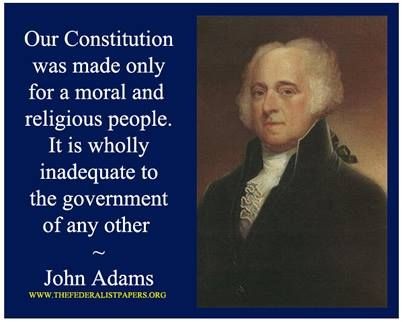
Knowing what was written in that document, about to be made public the next day, John Adams wrote to his wife, Abigail that the date of the signing of the Declaration of Independence in July 1776 would become the most memorable date in American history. He expected it to be celebrated annually by future generations as a great anniversary festival and day of deliverance. He believed the holiday should be marked by solemn devotion to God and public festivities including pomp and parade, shows, games, sports, guns, bells, bonfires, and illuminations across the continent from this time forward forever more. You can see the details at the end of the transcript (below).
The Indescribable sacrifice of America’s Founding Patriots
What did America’s founding father, John Adams, say about the inability of future generations to appreciate the sacrifice made by their generation?
John Adams expressed deep concern that future generations would fail to recognize the immense cost of their freedom. He is famous for a 1777 letter, where he wrote: “Posterity! You will never know how much it cost the present generation to preserve your freedom! I hope you will make a good use of it. If you do not, I shall repent in Heaven that I ever took half the pains to preserve it.”
The devoutly Christian John Adams deeply believed that the founding generation of America sacrificed their prosperity, safety, and peace of mind deliberately for the purpose of establishing liberty in their land. Doing that was unquestionably a God-given blessing to his generation. But he also had a deep sense that there was a significant risk that unborn generations would take these privileges for granted. Adams feared that without a deep appreciation for the moral burden and hardships endured by his contemporaries, future Americans might fail to uphold the Constitution and the republican values they secured. He made it very clear that this sacrifice was not for any personal gain for any of the Founders. It was only to ensure that their sons and their descendants would have the liberty to pursue useful understanding of things like mathematics, philosophy, and the arts without the constant burden of war and political strife.
Now, don’t you think it’s worth sitting on those thoughts for a while? Did you feel the gravity of John Adams’ soul in his comment about future generations being so disconnected from the immense sacrifice that their forefathers suffered? Their surviving children did have friends and family members who died; who carried on life with amputated limbs; who struggled to recover from the horrible losses of their mothers and fathers. And now, what do our families face because of the reality of what Adams feared actually coming to pass? Are we willing to take ownership of that reality? And that doesn’t mean living in regret and hopelessness. It means … what are we actually going to do about it? Our nation’s 250th birthday doesn’t have to pass us by without us making a decision to change the self-destructive path we’re obviously on.
For a believer in the Bible, we can easily see a parallel to what God instructed Moses to write about the first historic Passover, 3,500 years ago, as recorded in the book of Exodus.

The Bible predicts and institutes the annual Passover celebration and the deliverance of the Israelites first in Exodus 12:14–27. God commands Moses and Aaron to establish the Passover as a lasting decree to be celebrated for generations. They were God’s instruments to instruct the Israelites to eat the lamb with unleavened bread and bitter herbs to memorialize their deliverance from Egypt. That was the first time in history that we see mankind considering the institution of a special, set-apart day to be commemorated by future generations. That’s why it’s called a “holiday.”…or “holy day” – a day ‘set apart’ (holy) for a special, society-wide departure from normal activities.
Now, you might be thinking that you don’t need a civic law to make you take a day off work for a holiday of social activity, feasting and celebration. But how many of our fellow citizens today in our country actually take the time with their families to carve out a few hours of their Independence Day celebrations to meaningfully remember how the history of America began? Thirteen separate colonies of pioneers and settlers and slaves all came across the ocean from England, Africa and Europe. They were hard-working farmers, laborers, craftsmen, and merchants, living in challenging conditions, even for their times. I have to wonder if our generation could even survive those conditions. But they all eventually faced increasingly harsh conditions under the British Crown, even though they had consistently been faithful subjects for generations. People today have no idea how loyal to their homeland they were. They had no natural interest in the idea of forming a new separate nation… let alone the idea of rebelling against the only nation that they recognized as sovereign authority in civic matters. But that loyalty was pushed to the breaking point by the decisions of British King George to treat the colonists like they were his slaves, and even worse, his enemies. If you want to learn more about that, I’ve included some links in today’s podcast transcript… to the ministries of Christian historians who I’ve appreciated for many years like David Barton and Bill Federer. You really should spend some time watching their presentations. I believe you’ll truly be blessed and inspired as I have been for many years.
Objectives for today’s conversation:
When I thought of our program’s theme of “Reclaiming Your Legacy,” I don’t suppose there’s a more fitting topic for that idea than for us to discover how we can meaningfully reclaim something that has been all but lost since the days of our nation’s founders, 250 years ago.
So, what should be some of our objectives in this discovery? I listed a few for you to think about and see if you can actually think about your own ways to help ‘reclaim’ some of that legacy for yourself and your family.
What is the underlying purpose of celebrating the 4th of July holiday? [remembering our beginning and thanking God for our nation’s special blessings]
What is the believer’s continuing assignment to do with one another in regard to the legacy of our American heritage? [remind one another of past providence]
What is the most urgently needed insight for all Americans now? [discernment]
I’ll look at these questions with some answers for you to consider in the bonus segment of today’s podcast that you can hear anytime at our website, ReclaimYourLegacy.com. But first…
How Did George Washington think about the founding of America?
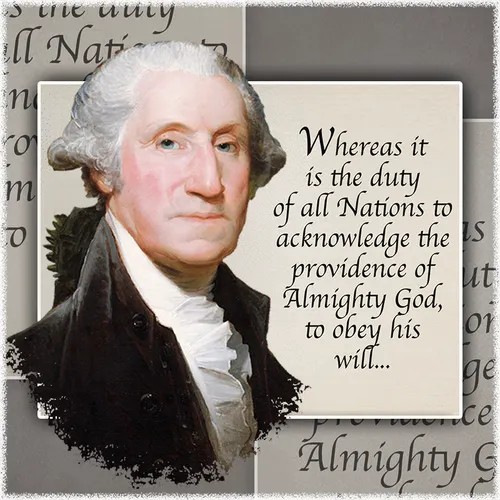
George Washington viewed the creation of the United States as a result of purposeful divine intervention. To him, America as a sovereign country, was not a by-product of mere chance. He frequently attributed the nation’s survival and success to the hand of Providence. He believed that every step toward independence was distinguished by what we would call miraculous signs of providential intervention. He wrote clear declarations that no people could be more bound to acknowledge the Invisible Hand guiding their nations’ affairs than the American people.
Here are a few of the Key expressions of this belief:
- Young Washington was a commander for the British during the French and Indian War, at the Battle of Monongahela, (1755): In a letter to his brother, Washington credited his survival, despite four bullets passing through his coat and two horses being shot under him, to the “all-powerful dispensations of Providence.” He stated that he was protected “beyond all human probability or expectation.”
- Two years into the Revolutionary War (1778): Writing to the Continental Army’s Brigadier-General Nelson, after the amazing evacuation from Brooklyn Heights, by a surreal protective dense fog, Washington declared that the “hand of Providence has been conspicuous” in the war’s events. He argued that anyone lacking faith or gratitude in this matter was “worse than an infidel” and “more than wicked.”
- Washington’s First Inaugural Address (1789): Washington opened his address with “fervent supplications” to the Almighty, noting that “every step” the nation had taken to become independent seemed “distinguished by some token of providential agency.”
- In one of his General Orders (1776): Washington encouraged troops to view divine favors as a reason for their continued exertion, stating it would be “the basest ingratitude to the Almighty” to show backwardness in the public cause.
Washington’s writings consistently emphasized that America’s liberty and future prosperity depended on the “smiles of a Divine Providence” and the nation’s moral adherence to the “eternal rules of order and right which Heaven itself has ordained.”
Those modern Christians, and others who express their criticisms of George Washington, because he owned slaves or was a Free mason, unfortunately seem to neglect Washington’s own personal expressions of his constant sense of humility before God. They miss his many instances of giving open credit to Almighty God for His providential protection in the success of the cause of America’s struggle for independence and freedom.
President Ronald Reagan explicitly stated his conviction about the reality of divine providence during a 1982 naturalization ceremony. He declared… “It’s long been my belief that America is a chosen land, placed by some Divine Providence here between the two oceans to be sought out and found only by those with a special yearning for freedom.”
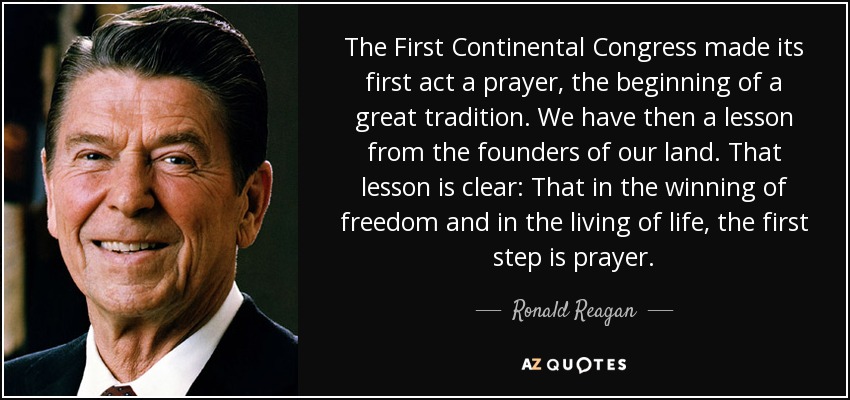
In another speech to the NRB (National Religious Broadcasters), President Reagan said this: (recording at: https://www.youtube.com/live/7POXKE1cDKw?si=3TNRjpiY2dNWqdMn&t=3217 – 53:36 – 55:18
…WE NEED GOD MORE THAN HE NEEDS US.”
Transcript: “I’ve always believed that we were put here for a reason, that there is a path, somehow, a divine plan for all of us and for each one of us. And I’ve also always believed that America was set apart in a special way, that it was put here between the oceans to be found by a certain kind of people, based on a quality that these people had in that they came from every corner of the world. And a country then was created by men and women who came, not for gold, but mainly in search of God. They would be free people, living under the law, with faith in their Maker and in their future.
It’s been written that the most sublime figure in American history was George Washington, on his knees in the snow at Valley Forge. He personified a people who knew that it was not enough to depend on their own courage and goodness, that they must also seek help from God — their Father and preserver.
Where did we begin to lose sight of that noble beginning, of our conviction that standards of right and wrong do exist and must be lived up to? Do we really think that we can have it both ways, that God will protect us in a time of crisis even as we turn away from him in our day-to-day life?
It’s time to realize, I think, that we need God more than he needs us.”
President Reagan continued in that speech: “But millions of Americans haven’t forgotten. They know we’ve been on a toboggan slide, and they’re determined to do something about it. And I’m honored to stand before you, 3,500 of their most effective and courageous leaders. And let me say, I do not agree with those who accuse you of trying to impose your views on others. If we have come to the point in America where any attempt to see traditional values reflected in public policy would leave one open to irresponsible charges, then I say the entire structure of our free society is threatened. The first amendment was not written to protect the people from religious values; it was written to protect those values from government tyranny.”
Now there’s a statement that applies in today’s highly media-conflicted world. The president concluded by saying…
“Let us go forward with our conviction that education doesn’t begin with Washington officials or State officials or local officials. It begins with the family, where it is the right and the responsibility of every parent. And that responsibility, I think, includes teaching children respect for skin color that is different than their own; religious beliefs that are different from their own. It includes conveying the message to the young, as well as to the old, that racial discrimination and religious bigotry have no place in a free society.
And let us go forward with our conviction, that there is in the American heart a deep spirit of love — of caring and willingness to work together — waiting to be tapped. And I want to ask you tonight, will you lead our crusade to restore our tradition of neighbor caring for neighbor?”
President Reagan was speaking to the annual key meeting of over 3,000 of the men and women who are involved with Christian radio and TV programming in America in the association called the NRB – the National Religious Broadcasters. And over 40 years ago, when that speech was delivered in 1982, you can be sure that every one hearing him there were on the same page of biblical ethics and moral principles that formed the foundation of America’s Founding Fathers. They knew that freedom of religion did not include the freedom to undermine the Bible foundations of repentance, truth, love, mercy, biblical justice, and humility to walk with the God of the Bible.
Benjamin Franklin’s Appeal to for prayer to the Constitutional Convention in 1787
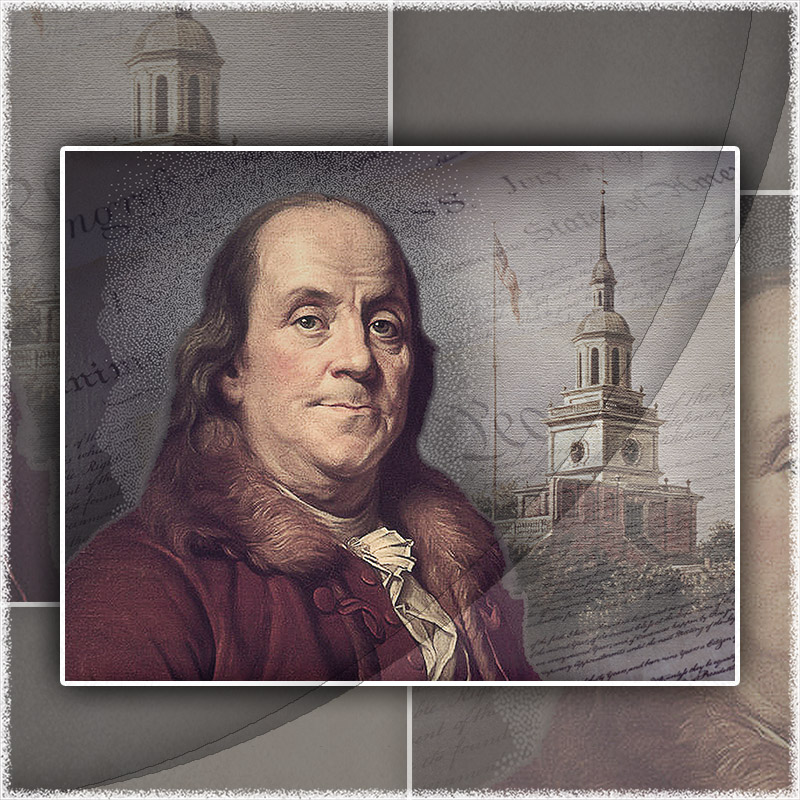
On June 28, 1787, America’s Constitutional Convention was paralyzed by deadlock over state representation. Delegates argued for five weeks with little progress. At age 81, Benjamin Franklin rose to address the assembly, noting that their failure to find political truth through reason alone was a “melancholy proof of the imperfection of the Human Understanding.” He reminded the delegates that during the Revolutionary War, they had prayed daily for divine protection and were “graciously answered,” asking if they had now forgotten that “powerful friend.”
Franklin’s core message was that God governs in the affairs of men. Listen to what he said… in the Bonus Segment of today’s podcast at ReclaimYourLegacy.com.
It’s clear that Ben Franklin, arguably the least devout of the patriotic Christian Founders of America, fully understood the new nation’s absolute dependency on God’s protection, provision, and prosperity.
The Bible is clear about God’s sovereign rule over the human rulers of mankind’s nations.
Psalm 75:7 “But God is the Judge; He puts down one, and exalts another.”
And his prophet Daniel writes three times in one chapter of his book… “the Most High is ruler over the realm of mankind, and bestows it on whomever He wishes.” The first of those declarations is even noted as being admitted by Babylon’s King Nebuchadnezzar, adding that He “sets over it the lowliest of men.” (Daniel 4:17, 25, and 32).
There’s a passage in the Book of Job where the man, Job, discusses how God uncovers mysteries, brings light into places of deepest gloom and sovereignly deals with nations and their leaders.
In this brief revelation of Scripture, Job declares that God “gives increase to the nations, and then destroys them; He enlarges the nations, and guides them before they fall.” The text further explains that God deprives the leaders of the world of their understanding, causing them to wander in desolate places without light. This passage highlights the divine sovereignty over the rise and fall of empires and nations.
The New Living Translation puts it this way:
“He uncovers mysteries hidden in darkness; he brings light to the deepest gloom.
He builds up nations, and he destroys them. He expands nations, and he abandons them.
He strips kings of understanding and leaves them wandering in a pathless wasteland.
They grope in the darkness without a light. He makes them stagger like drunkards.” Job 12:22-25
There can be no question that God uniquely guided the 18th Century patriots of America to found a new nation, built on their guiding principle of “We the people” acknowledging “No king but Jesus.” That was their popular unifying motto. Every nation before America was ruled by monarchs and Caesars, sultans and emperors. Is it any wonder that the ruling powers of darkness, which are spiritual forces of wickedness in heavenly places, have been taking advantage of every concession that they are given by Christ’s kingdom people? (Eph 6:12)
Think about that! That’s why God’s Word encourages us with no uncertain words to…
“Do not be overcome by evil, but overcome evil with good.” Rom 12:21
“And have no fellowship with the unfruitful works of darkness, but rather expose them.” Eph 5:11
“Therefore, take up the whole armor of God, that you may be able to withstand in the evil day, and having done all, to stand.” Eph 6:13
“But as for you, brethren, do not grow weary in doing good.” 2 Thes 3:13
When I was a young elementary school student in grade school, we had a time in most of our classroom days to sing several songs from our little song books. One that we sang almost every day made it very memorable to me. It was literally a prayer to God… “God Bless America… land that I love; stand beside her, and guide her, through the night, with a light from above… from the mountains to the prairie to the oceans, white with foam… God, bless America, my home sweet home.”
“Blessed is the nation whose God is the Lord…” (Psalm 33:12)
Clearly, I will do what God enables me to continually remind my children and others why America has been so blessed. Will you do your part to preserve the freedoms we’ve had for the next generation?
BONUS SEGMENT
The rest of that verse in Psalm 33:12 adds: “…The people He has chosen as His own inheritance.” Did you get that? The word “nation,” in Scripture (Hebrew = ‘goy”), is translated in the Greek language to the word “ethnos,” meaning people group or ethnicity. So, do you see why it’s fitting that the Holy Spirit inspired the psalmist to make it very clear that the voluntary choice of a people to make The LORD our God, is what leads to making that people the ones who are chosen to be God’s inheritance.
So, there you have it… Psalm 33:12… the whole verse pronounces the familiar blessing:
“Blessed is the nation whose God is the LORD, the people He has chosen as His own inheritance.”
The turning point for America’s Founders in crafting the new Nation’s Constitution
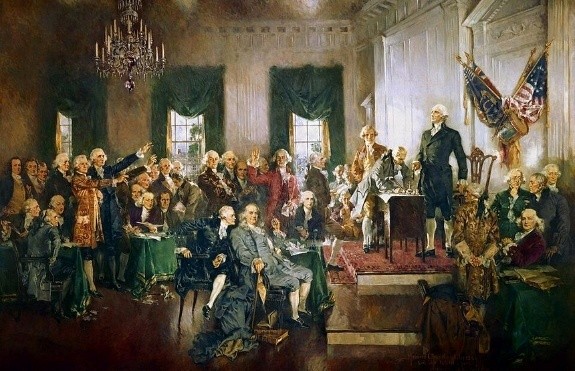
With that in mind, listen to what God providentially guided Ben Franklin to say on that hot Philadelphia day in June of 1787, when the delegates from all 13 states were log-jammed in continued haggling over the fairness of representation of the smaller populated states verses the larger ones. Remember, this was some five years after the kinetic war ended (albeit officially ended on September 3, 1783, with the Treaty of Paris), and almost 11 years after that historic 4th of July when the Declaration of Independence was signed by the delegates from the 13 colonies. He rose to address the chairman of the congress, George Washington, and said this:
“Mr. President … The small progress we have made after 4- or five-weeks, close attendance, and continual reasonings with each other — our different sentiments on almost every question, several of the last, producing as many noes as ayes, is methinks, a melancholy proof of the imperfection of the Human Understanding. We indeed seem to feel our own want of political wisdom, since we have been running about in search of it. We have gone back to ancient history for models of Government and examined the different forms of those Republics which, having been formed with the seeds of their own dissolution, now no longer exist. And we have viewed Modern States all round Europe, but find none of their Constitutions suitable to our circumstances.
In this situation of this Assembly, groping as it were in the dark to find political truth, and scarce able to distinguish it when presented to us,
…how has it happened, Sir, that we have not hitherto once thought of humbly applying to the Father of lights to illuminate our understandings? In the beginning of the Contest with G. Britain, when we were sensible of danger, we had daily prayer in this room for the divine protection. Our prayers, Sir, were heard, and they were graciously answered. All of us who were engaged in the struggle must have observed frequent instances of a Superintending providence in our favor.
To that kind providence we owe this happy opportunity of consulting in peace on the means of establishing our future national felicity (i.e. happiness or contentment). And have we now forgotten that powerful friend? Or do we imagine that we no longer need his assistance?
I have lived, Sir, a long time, and the longer I live, the more convincing proofs I see of this truth — that God governs in the affairs of men. And if a sparrow cannot fall to the ground without his notice, is it probable that an empire can rise without his aid?
We have been assured, Sir, in the sacred writings, that “except the Lord build the House they labor in vain that build it (Psalm 127:1).” I firmly believe this; and I also believe that without his concurring aid we shall succeed in this political building no better than the Builders of Babel: We shall be divided by our little partial local interests; our projects will be confounded, and we ourselves shall become a reproach and bye word down to future ages.”
Benjamin Franklin’s Request for Prayer
Franklin argued that abandoning prayer would cause mankind to despair of establishing governments by human wisdom, leaving them to “chance, war, and conquest.”
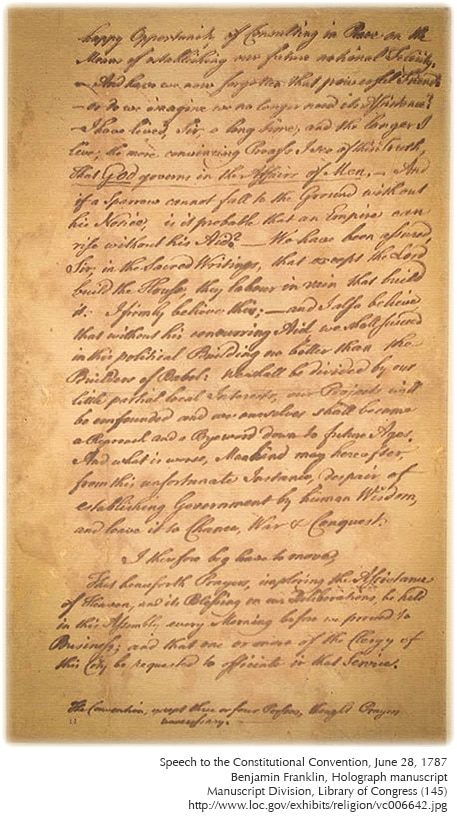
Franklin motioned that morning prayers be instituted in the assembly, requesting that local clergy officiate to implore “the assistance of Heaven.”
Franklin’s appeal put the spotlight on the belief that the new nation’s success depended on divine guidance rather than human intellect alone. All the men in the room knew this to be true.
Observing history, as America’s Founders carefully studied, we can all realize that every nation before America was ruled by monarchs and Caesars, sultans and emperors. And that’s why wisdom would guide us to seriously ask: “Is it any wonder that the ruling powers of darkness, which are actually spiritual forces of wickedness in heavenly places (behind the visible world), have been taking advantage of every concession that they are given by Christ’s kingdom people? (Eph 6:12)
Remember, Jesus made it clear that, because of His victory over death through His resurrection, that He has defeated the power of the Devil over nations. He declared, ““All authority has been given to Me in heaven and on earth (Matthew 28:18).” So, isn’t that why we can have confidence in Jesus from what His apostle John wrote in 1 John 4:4? “Ye are of God, little children, and have overcome them: because greater is he that is in you, than he that is in the world.”
So, what did we discover in our little peek at some of the meaningful historic developments in the beginning of our nation of America? And what are some ways that we can help ‘reclaim’ some of that legacy for ourselves and our families?
If anyone asks “What’s the purpose why you celebrate the 4th of July holiday?
- You can honestly say … It’s actually called ‘Independence Day’ to help us remember our humble beginning as a nation and to thank Almighty God for our nation’s abundant blessings.
And if you think about what is the Christian’s continuing assignment to do with one another in regard to the legacy of our American heritage?
- You can resolve to ask God for His help to remind one another of His past providence in all the miraculous interventions that He has brought about to make this nation what it is.
But when it comes to the most urgently needed guiding quality for all Americans now, how would you answer that?
- What the nation is most in need of was perhaps best articulated by American pastor-author, A.W. Tozer [1897-1963]. He wrote: “We need the gift of discernment again in our pulpits. It is not the ability to predict that we need, but the anointed eye, the power of spiritual penetration and interpretation, the ability to appraise the religious scene as viewed from God’s position, and to tell us what is actually going on.”
Thankfully, we heard our President, Donald Trump, publicly read that familiar passage of Scripture from 2 Chronicles 7:14 … on April 21, 2026, as part of the “America Reads the Bible” marathon.
“If my people, who are called by my name, shall humble themselves, and pray, and seek my face, and turn from their wicked ways; then will I hear from heaven, and will forgive their sin, and will heal their land.” (start at 55:22 of Grace church service June 28, 2026 – ends at 55:46) https://www.youtube.com/live/7POXKE1cDKw?si=clBfcQotoNmBbUSU&t=3322
Thomas Jefferson – the appointed author of the Declaration of Independence
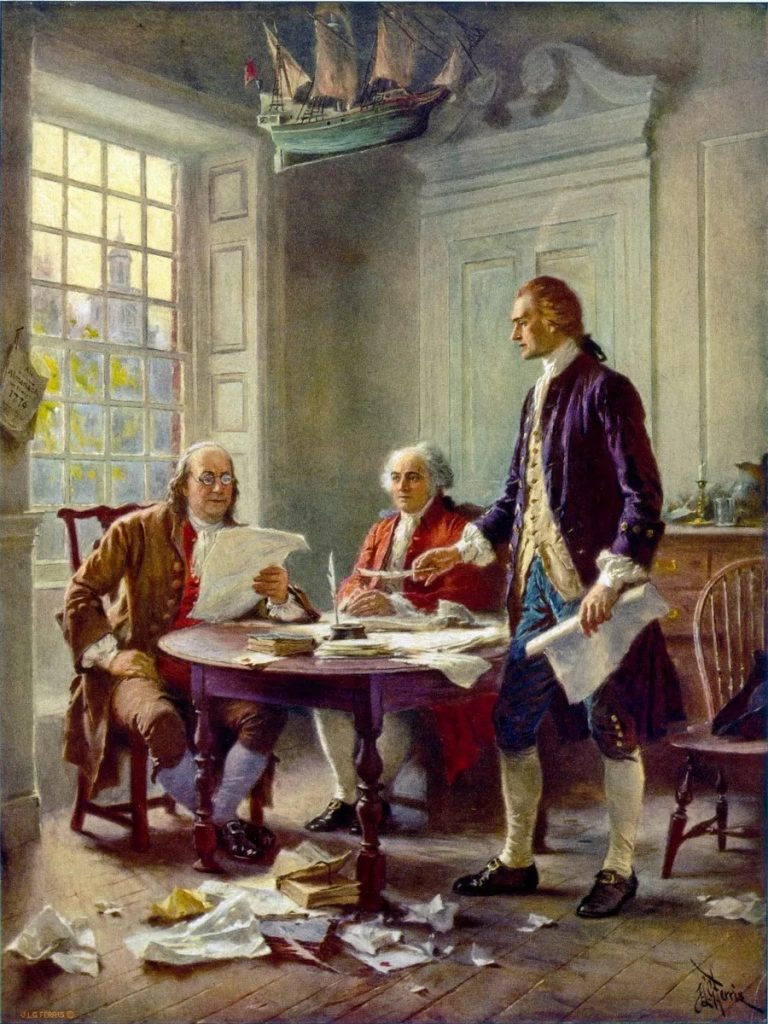
The authorship of the Declaration of Independence is credited to young Thomas Jefferson. He was one of the committee of five men, who were appointed by the delegates of the colonies at the gathered convention in Philadelphia in 1776, to write the document. It was to become the declaration that would become one of the most sublime written works of literature in all human history.
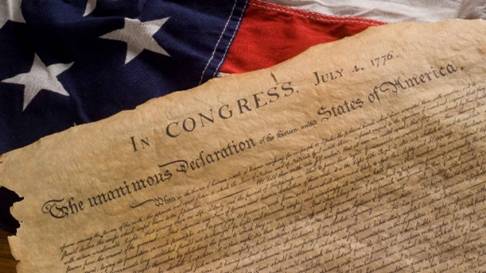
Thomas Jefferson Did NOT Want To Write The Declaration, So Why Did He?
One of the best story-tellers I know is Glenn Beck. You’ll want to hear his brief discussion about what he discovered in his research into the life of Thomas Jefferson. It really throws an informed light on the historic event that neither of us have heard elsewhere. Here’s the link: https://youtu.be/AS2dw7pLkHQ?si=1JCVI7oTeMwb2CQC
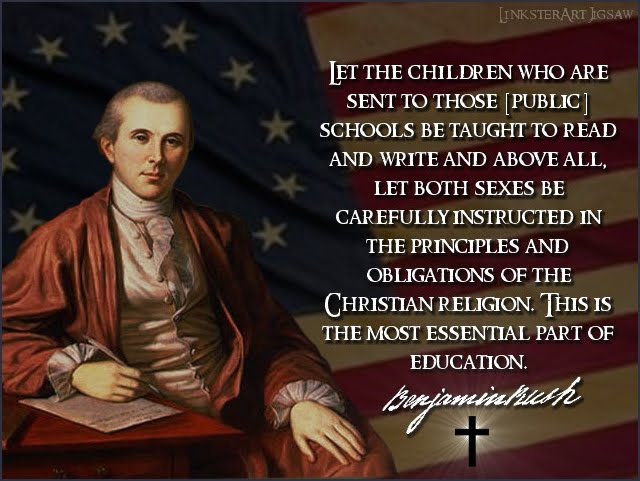
Dr Benjamin Rush, signer of the Declaration of Independence and Father of American medicine, said: “I do not believe that the Constitution was the offspring of inspiration, but I am as satisfied that it is as much the work of a Divine Providence as any of the miracles recorded in the Old and New Testament.”
Notes:
John Adams wrote about America’s ‘birth date’ (in a July 3, 1776 letter to his wife Abigail Adams):
“The Second Day of July 1776, will be the most memorable Epocha, in the History of America.—I am apt to believe that it will be celebrated, by succeeding Generations, as the great anniversary Festival. It ought to be commemorated, as the Day of Deliverance by solemn Acts of Devotion to God Almighty. It ought to be solemnized with Pomp and Parade, with Shews, Games, Sports, Guns, Bells, Bonfires and Illuminations from one End of this Continent to the other from this Time forward forever more.”
Although Adams envisioned July 2 as the official holiday, the Second Continental Congress officially adopted the Declaration of Independence on July 4, 1776, leading the nation to celebrate on that date instead. Adams eventually accepted this shift, with historical accounts noting that on his deathbed on July 4, 1826, he remarked, “It is a great day. It is a good day.”
July 4 was eventually chosen over July 2 primarily because it was the date the Continental Congress officially adopted the final text of the Declaration of Independence. July 2 was the actual date they voted for the resolution of independence.
On July 2, 1776, Congress voted to approve the Lee Resolution, formally declaring the colonies free from British rule. This was the legal act of separation that John Adams believed would be celebrated. However, Congress spent the next two days debating and editing the written Declaration of Independence drafted by Thomas Jefferson.
The final wording was approved on July 4, 1776. This was the date printed on the first public copies (the Dunlap Broadsides) distributed to the colonies and newspapers. Because the public announcement and the document itself bore the date “July 4, 1776,” that date became etched in public memory as the birth of the nation, overshadowing the earlier vote on July 2.
While the Continental Congress adopted the final text on July 4, 1776, they first ordered the document to be engrossed (hand-copied in large, clear script on parchment) on July 19. This official parchment copy was prepared by clerk Timothy Matlack.
On August 2, 1776, most of the 56 delegates signed the document at the Pennsylvania State House (now Independence Hall) in Philadelphia. John Hancock, as President of the Congress, was the first to sign. Not all delegates were present on that day; some signed later in 1776, and the last signer, Thomas McKean of Delaware, likely added his signature sometime after January 1777. Two delegates who voted for independence, John Dickinson and Robert R. Livingston, never signed the document.
No signer is recorded as explicitly regretting signing the Declaration of Independence itself, though several experienced deep remorse over related actions or later opposed the direction of the new government.
Benjamin Rush of Pennsylvania, a fervent advocate for independence, later deeply regretted his involvement in the Conway Cabal, a scheme to remove George Washington from command of the Continental Army. While he never renounced the Declaration, his criticism of Washington during the war clouded his reputation, and he later expressed profound shame for this political maneuvering.
George Read of Delaware is the only signer who voted against the resolution of independence on July 2, 1776. Despite his initial opposition, he signed the Declaration in August and remained a committed patriot, serving as Chief Justice of Delaware. There is no evidence he regretted his eventual signature.
Elbridge Gerry of Massachusetts, who signed the Declaration, later refused to sign the U.S. Constitution in 1787 because it lacked a Bill of Rights. While this demonstrated his ongoing concern for liberty, it was a critique of the new framework of government, not a regret over independence itself.
Some signers, like Richard Stockton of New Jersey, faced such severe hardship (imprisonment and property destruction) that they temporarily recanted under duress, but Stockton reaffirmed his support for the cause upon his release. The prevailing historical view is that while the signers faced immense personal sacrifice and some had second thoughts about specific wartime decisions or the subsequent government structure, none formally repudiated their signature on the Declaration of Independence.
The Bible predicts and institutes the annual Passover celebration and the deliverance of the Israelites primarily in the following passages:
- Exodus 12:14–27: God commands Moses and Aaron to establish the Passover as a lasting ordinance for generations, instructing the Israelites to eat the lamb with unleavened bread and bitter herbs to commemorate their deliverance from Egypt.
- Exodus 12:24–27: This passage specifies that when their children ask about the ritual, parents must explain it as the Passover sacrifice to the Lord, who passed over the houses in Egypt and delivered their homes.
- Exodus 13:3–10: God mandates that no leavened bread be eaten for seven days and commands the people to observe this feast in the month of Abib (Nisan) as a reminder of the swift deliverance from bondage.
- Exodus 13:14–16: It predicts future generations will ask, “What does this mean?”, to which the response is that the Lord brought Israel out of Egypt with a mighty hand, serving as a perpetual sign on their hands and frontlets.
- Leviticus 23:4–5: God declares the appointed times, specifying that the Passover is to be kept at twilight on the fourteenth day of the first month.
- Numbers 9:2–3: The Lord instructs the Israelites to observe the Passover at its appointed time and in accordance with all its statutes and customs as a memorial of their exit from Egypt.
- Deuteronomy 16:1–8: Moses reiterates the command to sacrifice the Passover lamb at the place the Lord chooses, at sunset on the anniversary of their departure from Egypt, ensuring the memory of their freedom endures.
Links to Godly Christian historians of American history
- Bill Federer – American Minute – https://americanminute.com/ and https://www.youtube.com/@BillFederer/featured https://www.youtube.com/channel/UCvLIFNml06UvND8Kvt5nF7Q/videos?view_as=subscriber&app=desktop here is a good place to begin: https://www.youtube.com/watch?v=FNo2P8bPHAY
- David Barton – Wallbuilders – https://wallbuilders.com/ and https://www.youtube.com/@wallbuilders
This new talk is a ‘must see’ – The Truth About Our Founding Fathers
https://www.youtube.com/live/PJkUY7jEepU?si=P-nrlSLgXzl_I2ct
President Ronald Reagan’s quote “we need God more than he needs us” appears in Ronald Reagan’s speech titled “Remarks at the Annual Convention of the National Religious Broadcasters,” delivered on February 9, 1982. In this address, Reagan emphasized the importance of faith, family values, and spiritual revival in America, stating: “It’s time to realize, I think, that we need God more than he needs us.” He spoke to an audience of religious leaders in Washington, D.C., urging them to lead a crusade to restore traditional values and community care.
The full transcript is available through the Ronald Reagan Presidential Foundation & Institute and the Ronald Reagan Presidential Library. Key themes of the speech include:
- The role of families as the bedrock of the nation
- The importance of religious freedom protected by the First Amendment
- Examples of faith-based community initiatives across America
- A call for spiritual revival and neighborly care
Benjamin Franklin’s call for prayer at the constitutional convention in 1787 – text https://christianheritagefellowship.com/benjamin-franklin-calls-for-prayer-at-constitutional-convention/ The omitted last portion of that brief speech said: “And what is worse, mankind may hereafter from this unfortunate instance, despair of establishing Governments by Human Wisdom and leave it to chance, war and conquest. I therefore beg leave to move — that henceforth prayers imploring the assistance of Heaven, and its blessings on our deliberations, be held in this Assembly every morning before we proceed to business, and that one or more of the Clergy of this City be requested to officiate in that service.”
President Donald Trump publicly read 2 Chronicles 7:14 (within the broader passage of verses 11–22) on April 21, 2026, as part of the “America Reads the Bible” marathon. He delivered the reading via a pre-recorded video message from the Oval Office during the 6 p.m. ET time slot, while most other participants read live at the Museum of the Bible in Washington, D.C. A recording of this same reading was later played at the “Rededicate 250” event on May 17, 2026, although Trump did not attend that gathering in person.