By Dennis Petersen
As the evidence is unearthed for world-wide catastrophe, hidden in plain sight, Global Flood deniers are being exposed for their outrageous lies to innocent school children!
What if the flood, recorded in the book of Genesis, wasn’t just a Bible story or fable? What if it’s actually part of humanity’s shared human memory?
Have you ever heard how cultures that never met, separated by oceans for centuries all tell the same story? A world-demolishing flood, a few human survivors, a floating vessel, a complete reboot of humanity’s beginning – a catastrophic reset. And now archaeology, ancient sites and discoveries buried underwater, are forcing an uncomfortable question. Could there have actually been more than one watery catastrophe that almost obliterated humanity?
People commonly say the Bible flood is just a myth, a legend borrowed from ancient Mesopotamia, or just symbolic spiritual ideas. If that were true, wouldn’t you expect the story to dwindle away over time, rather than get stronger? But now, we actually have more evidence than ever, pointing to historic reality more amazing than any legend. And it’s not just from one or two isolated places, not from one culture. It’s from all over the world. When you start looking at ancient sites, things get uncomfortable fast for the skeptical atheist.
Did you ever hear of Thonis-Heracleion, Egypt? It’s a major ancient Egyptian port city near Alexandria, submerged due to seismic activity and rising sea levels after the post-Flood ice age. It wasn’t rediscovered until 1999. [it served as a key trade hub between the Mediterranean and the Nile. Excavations by Franck Goddio’s team revealed temples, Greek sanctuaries, shipwrecks, and artifacts like bronze weapons and ceramics, highlighting its multicultural commercial role.]
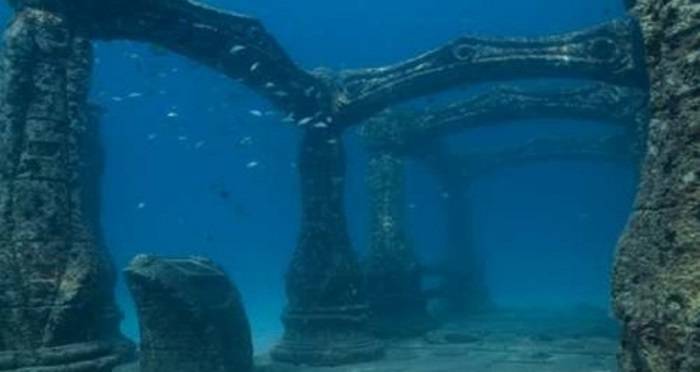
Pavlopetri, Greece is the world’s oldest known submerged city, dating back 5,000 years. Preserved in shallow waters off Laconia, it features a well-planned layout with streets, buildings, and tombs. Evidence of Mycenaean trade and gradual submersion due to tectonic shifts and sea-level rise makes it a unique archaeological site.
Dwarka, India is another one. A legendary city off Gujarat’s coast, linked to Hindu mythology and the Late Harappan period. The Indus Valley Civilization (IVC) was a Bronze Age culture in the northwestern regions of South Asian India. It lasted from 3300 BCE to 1300 BCE. In early 2026, India’s Archaeological Survey launched new research using advanced tech to explore submerged ruins… to expand our understanding of ancient Indian maritime networks.
Yonaguni Monument, in Japan is A controversial underwater rock formation off the coast of Yonaguni Island. The large stone geometric structures are believed by many to be man-made as debate swirls over whether it’s a natural formation or a remnant of a lost civilization, possibly linked to an ancient mythical continent called Mu.
Some ancient sites date back earlier than 2,500 BC. That’s before the great Egyptian pyramids were built. And many of them aren’t just old, they’re advanced. So, it raises the obvious questions… Who built them? And why are so many of them underwater? That’s the part some people don’t like to talk about. If these structures were once on dry land, then something dramatic had to change – Something global – Something violent enough to rearrange the features of the planet itself. And that’s where the idea of a pre-flood world comes in. A world that wasn’t like ours with different geography, less water, and more connected land. A world that didn’t disappear quietly, but was buried.
According to the Biblical narrative, the world before the Flood perished (2 Peter 3:6)! It was much different than the world we live in now. The continents were connected as what we now call Pangea. And that changes how you look at everything!
When the flood came, it didn’t just drizzle for a few weeks. Genesis 7 describes something far more violent and far more global. It says that the fountains of the great deep burst forth. Water didn’t only come from above. It came from inside the crust of the earth itself. At the same time, the windows of heaven were opened and a deluge of rain fell for 40 days and 40 nights, followed by another 110 days of “prevailing water” upon the whole earth.
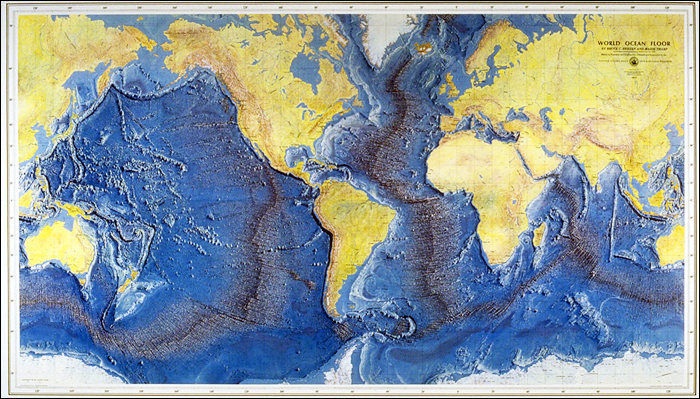
This wasn’t just a local disaster. It was the planet breaking open. And with today’s submarine reconnaissance technology, the sea floor geological scars are there, all around the world to see. We see massive cracks in the earth, deep sea vents, fault lines, and subduction zones. These are reminders of where the fountains of the deep once did burst through the Earth’s crust. Some of them are still moving, still shifting, as if the planet is still recovering from what happened.
There’s another detail in that passage people often overlook. While reading it, you notice that Noah was 600 years old when the flood came. That should tell you something was way different back then. People lived much longer before the flood than they do now. Isn’t that something worth talking about? It points to a world that didn’t operate by the same rules we’re used to. After the flood, everything changed… waiting to be discovered. And this is where it gets even harder to brush aside.
The flood story doesn’t belong to just one religion, region or time period. It appears over and over; told by many different people, living far apart and speaking completely different languages.
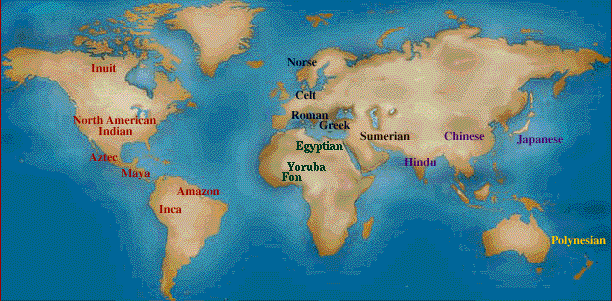
The Sumerians, for example, recorded a story where the gods decide to destroy mankind. But one man, Ziusudra, the king of Shuruppak, was warned by the god Enki (Ea) of a divine decision to destroy humanity with a great flood. Enki instructed Ziusudra to build a massive, cube-shaped boat, load it with his family, animals, and seeds of all living things, and ride out the deluge. The storm raged for seven days and seven nights, flattening the land and turning all mankind to clay. When the waters receded, the boat grounded on Mount Nisir, and Ziusudra released a dove, a swallow, and finally a raven, which did not return—signaling dry land. After disembarking, he offered sacrifices to the gods. This Sumerian flood myth, also known as the Eridu Genesis, is the oldest known version of the global flood story, predating the biblical account of Noah.
Does that sound familiar? The Sumerian-Akkadian epic of Gilgamesh was written in cuneiform on 12 baked clay tablets. It tells of a semi-divine king of Uruk, who is two-thirds god and one-third man. When the supreme god sees humanity has become unruly, he deems they must be destroyed. He gives instructions to Utnapishtim, the legendary king of the ancient city of Shuruppak in what is now southern Iraq. The king obeys, builds a giant box, called the preserver of life, and brings his wife and all kinds of creatures on board. They survive the flood and life begins again, somewhere around 2900 BC.
Across the Atlantic Ocean in ancient Mexico, you find the Aztec version. A man named Nata is warned of a coming flood. He hollows out a cypress tree, seals himself and his wife inside, and is told they may eat only one ear of maze each while the waters cover the earth. Different culture, same core story. And they didn’t get it from Christian missionaries.
According to the ancient Greek flood myth, Zeus decided to destroy humanity due to the impiety and hubris of the Bronze Age race, particularly after King Lycaon of Arcadia sacrificed a human child on Zeus’s altar. Zeus unleashed a great flood that submerged the entire world. Deucalion, a king of Phthia in Thessaly, was forewarned by his Titan father Prometheus to build a chest (or ark) and stock it with provisions. With his wife Pyrrha, daughter of Epimetheus and Pandora, he survived the deluge for nine days and nights, drifting until the chest landed on Mount Parnassus. When the waters receded Deucalion and Pyrrha prayed to Themis, the goddess of divine law, for guidance about repopulating the earth.
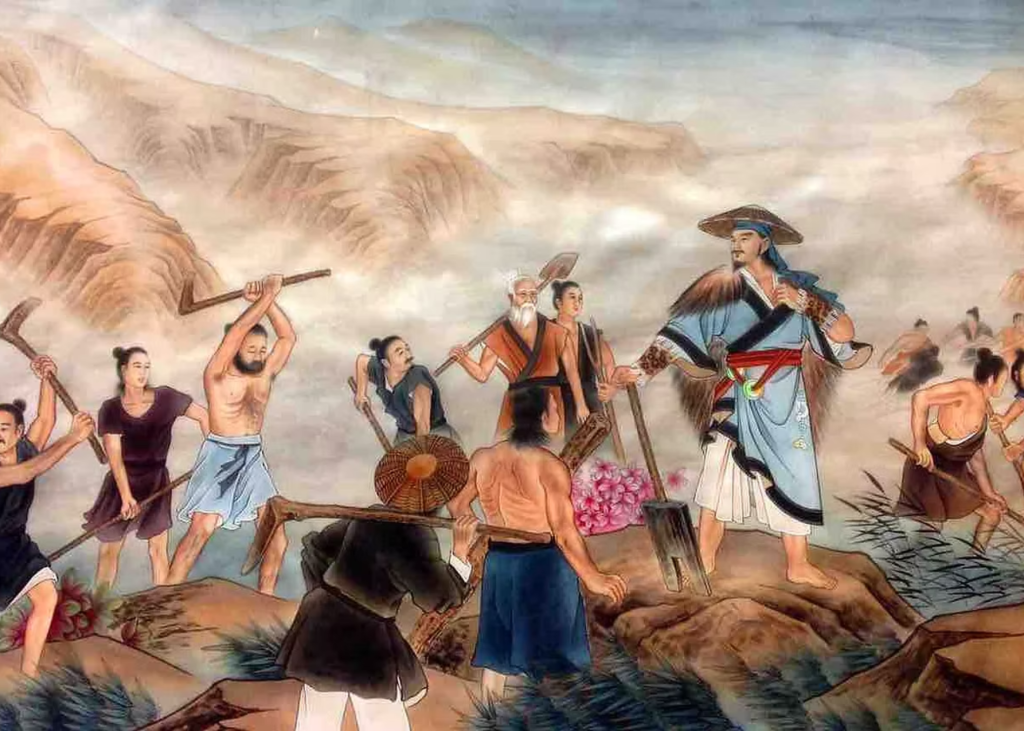
China has many flood legends. One is about Emperor Yao when the Yellow River flooded the land and Yaoan, known as Yu, the Great, used an enchanted staff to dig channels and trenches to lower the waters. Another story tells of Fuhai, his wife, three sons, and three daughters, strikingly similar to Noah’s family, who survive a great flood and repopulate the earth.
In Hindu tradition, the god Vishnu appears to the first man, Manu, in the form of a fish. Manu is warned that the world will be destroyed by a great flood. So he builds a large boat, bringing his family, seeds, and animals to restore life afterward.
The Buddhist tradition tells a long story of a wise leader and a foolish leader. The wise one builds a ship and survives with his followers while the foolish one ignores the warning and perishes.
There are the hundreds of other stories from Persia, Syria, Italy, Lithuania, Russia, Canada, the Americas, Hawaii, and many more. Different names, different details, same event.
So, the question really isn’t why the stories exist. The real question is why do so many people still insist it never happened? How did all these distant cultures end up telling the same story?
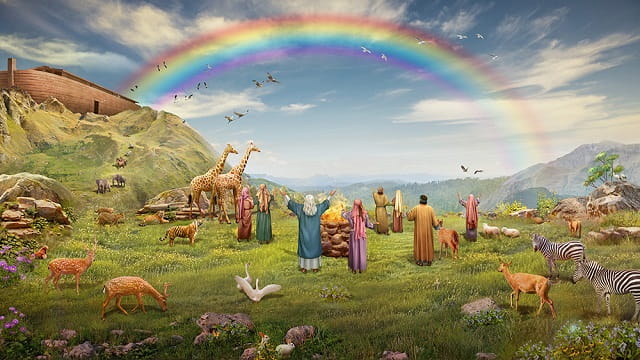
Genesis gives us the answer after the Great Flood, saying Noah’s three sons began to populate the whole earth after God made His everlasting covenant between God and “every living creature of all flesh that is on the earth” (Genesis 9:16). He sealed that covenant with the sign of the rainbow as an eternal reminder that He would never destroy the earth by a global flood again. In fact, He used the Hebrew word Mabbul to distinguish the catastrophe as a global flood. In English we call it The Deluge… and that’s uniquely different from all the other words used to describe even disastrous regional tsunamis and typhoons.
After the Deluge, Noah’s growing family of descendants didn’t immediately scatter across the planet. They stayed together for several generations, lasting several hundred years according to the most ancient Samarian, Ethiopic, and Hebrew-translated Greek manuscripts (called the Septuagint from as early as 280 BC).
All 70 of the named families born out of Noah’s three sons, shared the same language, the same memories, the same history. The flood wasn’t a legend to them. It was a horrific event through which the ancestors of all their families had lived. Then the rebellion happened at the Tower of Confusion – that’s what the word ‘babel’ means. God confused their languages there. And suddenly, all the human families descended from Noah, who had understood each other’s language for every generation since the beginning, were suddenly thrown into a forced separation.
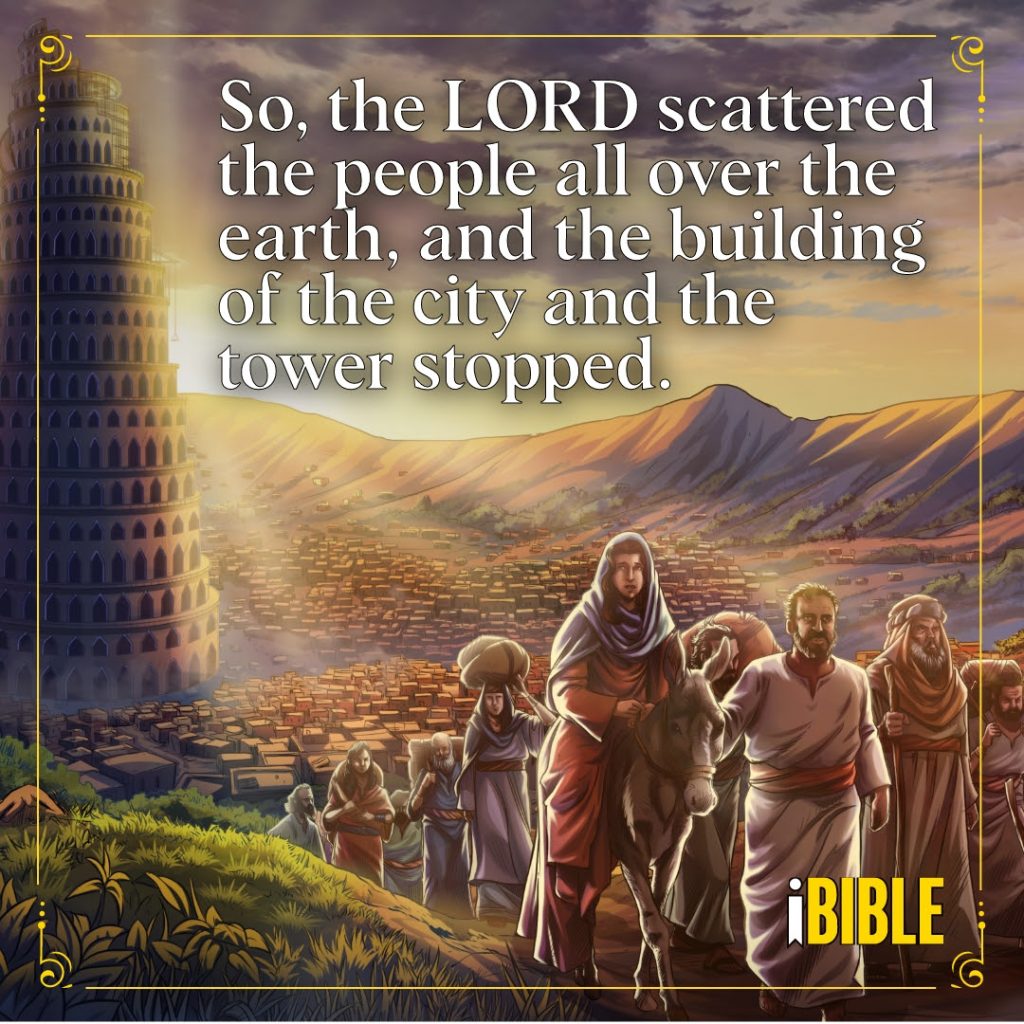
With all their collective knowledge of technology, preserved from before the Deluge, they migrated, and spread out across the vast world. As they formed new cultures that we call ethnic groups, or nations with new languages, they carried those memories with them in their oral traditions of story-telling. Over time, the details of the story were painted with differing words and meanings. Names changed and symbolism became interpreted differently by the creative genius of each society’s story-telling grandparents. But the core story stayed intact. A global flood, judgment, survival, a new beginning. That’s how those accounts became woven into the identity of so many cultures.
Eventually, the truthful reality of power-hungry human demigods makes it evident that there are people who don’t want you to believe any of this. Not just the Deluge, but the idea of advanced civilizations existing before that most notable event. Because if those civilizations were real … and if the Deluge really happened, it directly challenges the humanistic, man-made, evolutionist fairy tale of deep time and the arrogant, naturalistic speculations built around ridiculously foolish ideas of spontaneous generation and impossible mutational advantages.
Instead of testing out the real evidence with rigorous scientific research, the response from the academic elites of modern society is often ridicule. Anyone questioning the standard narrative is labeled unscientific, ignorant, or crazy. But isn’t it insane how this treatment doesn’t just happen to Christians? Even researchers outside biblical faith get attacked for daring to delve into ancient mysteries confirming the Bible account in Genesis. Graham Hancock is one example. His series, Ancient Apocalypse, presents evidence of ancient civilizations that predate humanistic-accepted timelines. His work is highly spurned by the academic elites, not because his findings are weak but because the implications are uncomfortable.
So, if a global flood really happened, we shouldn’t just expect stories. We should expect physical evidence too. We should see indicators buried into the earth itself. And once you start asking questions like “what would the world look like after a global Deluge?” …you’re led straight to the ground beneath your feet. If a global flood really did cover the Earth, then the ground itself should tell that story.
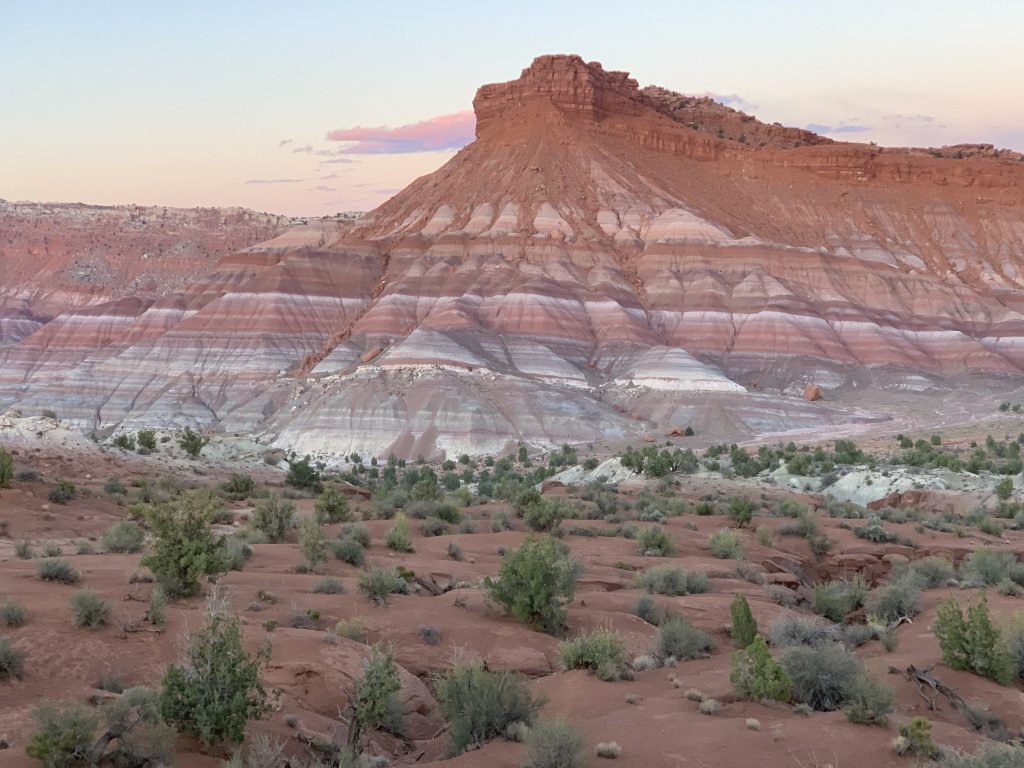
According to the evidence, it does… everywhere you look! Across the planet, we see thick, water-deposited layers of sandstone rock, limestone, and various sedimentary rocks stacked on top of each other like layers in a cake. And they’re all laid down by moving water! That’s what sedimentary layers are. And what do you find buried inside them everywhere on our planet? Billions of dead things! Plants and animals, buried alive and suddenly… not over long stretches of time. And billions of even some of the most delicate plants and creatures are preserved so perfectly that their burial under vast tons of pulverized rock had to be virtually instantaneous. How do we know that? Just think… what happens when a sea creature gets killed and buried in a typical local flood today? it decays. It gets eaten. It falls apart. But most fossils don’t show that kind of process at all. Instead, they look frozen, like a snapshot, in a catastrophic moment of time.
If you look in museums and books on fossils, you’ll find some fish fossils that died in the process of eating another fish. It didn’t even have time to swallow its last meal before it was suddenly buried by mud and sediment. There’s a famous example of another petrified sea creature caught in the act of giving birth, before it was completely covered and preserved in limestone. That doesn’t happen over decades, let alone millions of years.
They were buried alive quickly and so deeply under layers of sedimentary ‘wet cement’ that covers whole states and countries.
Then there are fossils that are so perfectly preserved they look like you peeled them off your car’s radiator grill yesterday. Dragonfly fossils with delicate wings intact. Beautifully intact tree leaves by the millions, even Sea lilies, and soft-bodied creatures like worms and jellyfish that wouldn’t fossilize at all if they were exposed to the elements for even a few hours. The only way you could get preservation like that is if their burial happened fast. It had to be sudden, violent, and overwhelming. And that brings up a bigger issue.
If life evolved slowly over millions of years, we should see evidence of that process clearly in the fossil record. We should find countless examples of creatures halfway between one kind and another – transitional forms everywhere. The earth should be full of them! But they’re not there. Evolutionists call these missing links, but there’s a problem. The whole chain is missing. There are no links at all.
If something is missing, we’re led to believe it should exist somewhere and just hasn’t been found yet. Even Charles Darwin, the man regarded by modern students as the father of evolution theory, saw this problem. Back in 1859, he admitted that geology didn’t produce the intermediate forms of gradual changes that his theory required. The millions of links he expected to find wasn’t there then, when he admitted that the absence of those links was “the most serious objection to my theory.” And 170 years later the situation hasn’t changed. Those transitions still haven’t shown up … and they never will. Instead, what we always find are fully formed, fully functioning creatures, exquisitely designed by the Creator to thrive with astonishing precision. No experimental stages, no half-built designs, just animals appearing complete in the fossil record. And rather than questioning the timeline, the popular public explanation keeps changing. The years get stretched, the numbers get adjusted, the story changes, which leads straight into a modern example of how they cover their ridiculous lies.
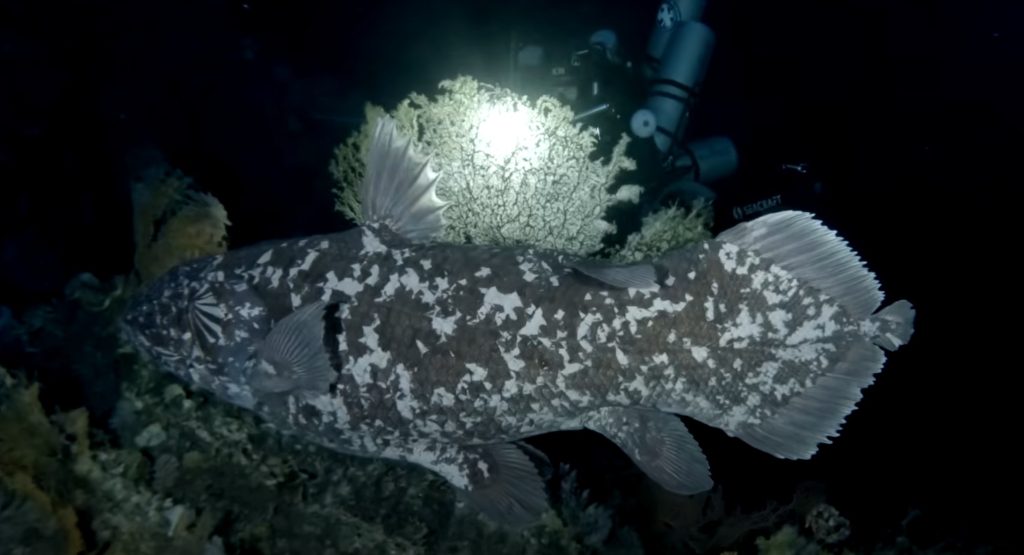
A lobe-finned deep-sea fish, called the coelacanth, was supposedly extinct for 66 million years. In 1938 they were discovered to be still thriving in the Indian Ocean east of South Africa. Discoveries like that should lead a critically thinking person to seriously question the whole presupposition of deep time.
It was the same fish with the same structure as the fossils they had previously found. If evolution over vast millions of years were true, you might suppose this creature would have changed some by now. But it didn’t. It looks exactly the same as the fossils claimed to be millions of years old. And would you believe that pattern shows up everywhere? Crabs are still crabs, even if the fossil ones are claimed to be over a hundred million years old. Beetles are still beetles. The fossil record doesn’t show creatures slowly turning into something else. It shows them appearing fully formed just like the animals we see today.
That’s because these fossils didn’t show us any proof of being millions of years old. They formed during a catastrophic event. That’s where fossil graveyards come in.
All over the world, we find massive fossil deposits where huge numbers of animals died and got buried at the same time. Trilobites, brachiopods, corals, sponges, crinoids… entire ecosystems wiped out and buried together. And virtually everywhere fossil clams are found around the world, they’re found buried in massive grave yard dumps by the thousands. And every scientist secretly knows they were all buried alive by a vastly overwhelming flood unlike anything that has ever happened since the Deluge. Why do we know that? Because every single clam in those graveyards is tightly closed, proving they were all still alive when they died. Anything less than a cataclysmic Deluge would result in dead creatures like clams, opening up as their dead muscles relaxed. But that’s not what happened. And the forensic evidence of our detective story gets even worse for the indoctrinated mind of the Deluge-denying evolutionist.
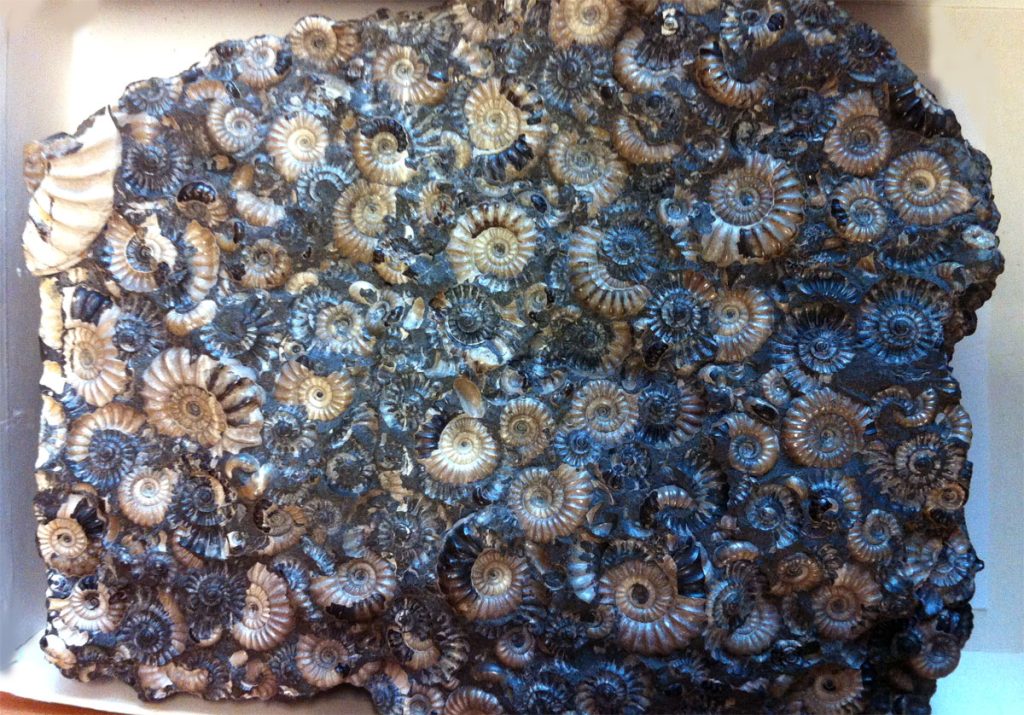
Petrified seashells are found on dry land all over the world, even on top of the highest mountains on earth… not near coastlines, but miles away from any ocean. And we’re not talking about just a few shells here and there. Chalk formations are made up of trillions of microscopic shells, stretching from England’s White cliffs of Dover, across Europe into Israel. They’re also found in the Midwest of the United States and in southwestern Australia. Inside these chalk beds, fossils of whole petrified bodies have been found including…
- Marine reptiles: Mosasaurs, giant marine lizards up to 49 feet (15 m) long, are commonly found, especially in the Niobrara Chalk of Kansas. Plesiosaurs up to 46 feet (14 m) long and ichthyosaurs are also present.
- Flying reptiles: Pterosaurs with wingspans up to 30 feet (9 m) are known from chalk deposits, likely having flown above the chalk seas.
- Large fish and sharks: Fish up to 16 feet (5 m) long and large sharks, including those with preserved teeth, are found in the Niobrara and English chalk beds.
- Large marine birds: up to 6.5 feet (2 m) tall, have been identified in the Niobrara Chalk.
- Dinosaurs: While primarily land-dwelling, ankylosaurs and hadrosaurs up to 30 feet (9 m) long have been found in the same deposits, – leading evolutionists to stupidly suggest they may have lived near or fallen into the sea.
Huge formations of limestone in the Tibetan mountain range where Mount Everest is located, contain fossils of ancient sea creatures like crinoids and clams, that only live underwater.
Marine fossils found in the mountains of Tibet include a diverse range of sea creatures preserved in sedimentary limestone rock layers, including clams, shark teeth, and even bones of large marine reptiles. Key fossil types include:
- Ammonites: Spiral-shaped marine mollusks from the Mesozoic Era, commonly found in limestone formations across regions like the Zongpubei Formation in Gamba and Tingri.
- Brachiopods and bivalves: Shelled marine invertebrates that thrived in ancient shallow seas.
- Crinoids (“sea lilies”): Echinoderms with feathery arms, often preserved in limestone beds.
- Foraminifera and ostracods: Microscopic marine organisms whose fossilized remains are abundant in marine strata.
- Coral fossils: Indicative of ancient reef ecosystems in the Tethys Ocean.
- Fossilized shark teeth: Evidence of predatory marine life in the ancient seas.
- Ichthyosaur remains: Fossilized bones and skeletons of large marine reptiles, such as Himalayasaurus tibetensis, found in the Upper Triassic Qulonggongba Formation.
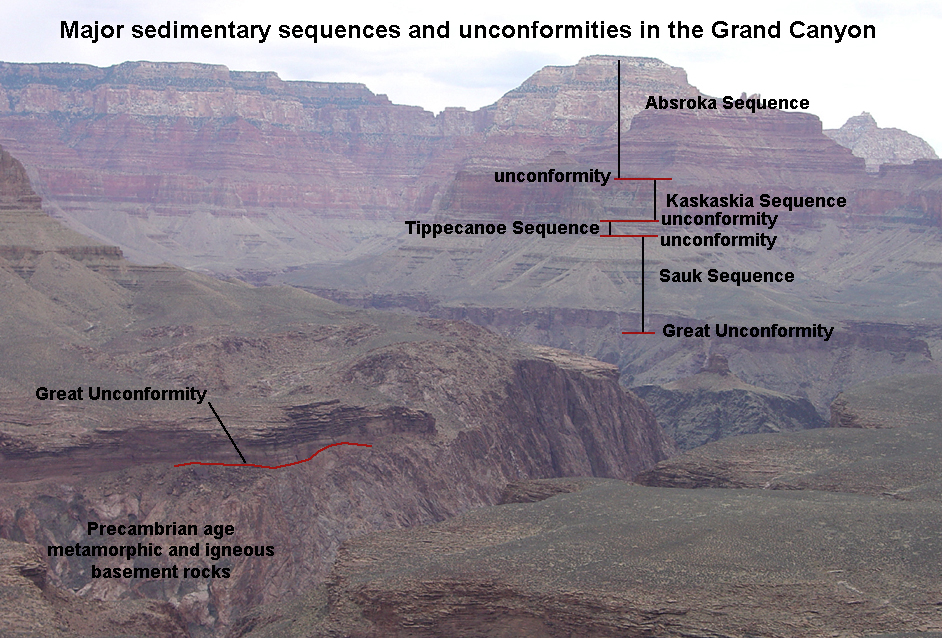
As the year-long flood leveled every pre-flood mountain, and then laid down thousands of feet of rock layers worldwide burying trillions of fossils, no wonder we find them in the rocks of high mountains everywhere. The Bible even declares that Earth’s post-flood mountains were shoved up and deep ocean trenches were made toward the end of the Deluge. There’s no question that the destructive force of water encased most of the fossils in pulverized calcium carbonate – limestone – the stuff we reconstitute to make Portland Cement. And then there’s coal and oil.
As the flood waters rose, giant waves would have uprooted trees, piling mountains of plant matter along with animals, and even artifacts from people, together in layers from the seabed to the mountain tops. Over time, that mass was compressed under as much as several miles of sedimentary layers creating enormous pressure.
Regardless of which opinion we have about the source of hydrocarbons producing the vast petroleum reserves of the world today, the immense pressure found in those oil deposits is extreme, but it continues to dissipate into the surrounding rock formations through time. The Earth couldn’t hold that kind of pressure for millions of years. It would all be dissipated by now. But with only several thousands of years since the Deluge, it makes good sense why there’s still lots of pressure in new oil strikes, enough to produce a ‘gusher’ that lasts not for just days, but even for months – like the one in Kern County California that gushed black gold for 18 months before it was capped in 1911.
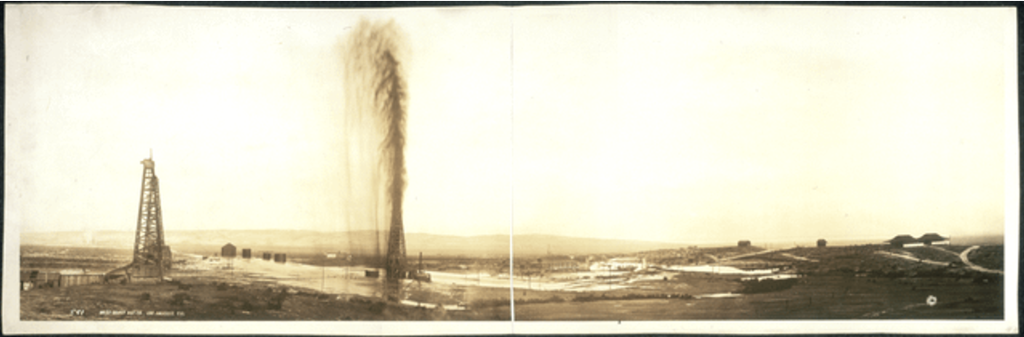
A hopeful new oil well in Kern County, California, struck big deposit, producing The Lakeview Gusher that lasted an astounding 18 months, before it was finally capped in September 1911. It was the most prolonged and largest oil gusher in American history, releasing an estimated 9 million barrels of oil. More recent accidental oil spills capture the public’s attention because of their unexpected burst from oil extraction casing systems under the ocean floor.
In April 2010, an explosion occurred on the Deepwater Horizon oil drilling rig in the Gulf of Mexico, some 41 miles off Louisiana’s coast. The explosion, caused by a surge of high-pressure methane gas from the Macondo Prospect well, killed 11 workers and injured 17 others. The oil rig platform sank two days later, triggering the largest marine oil spill in history. Over the next 87 days, an estimated 4.9 million barrels (210 million gallons) of crude oil leaked into the Gulf of Mexico from the damaged wellhead, located over 5,000 feet below the water’s surface.
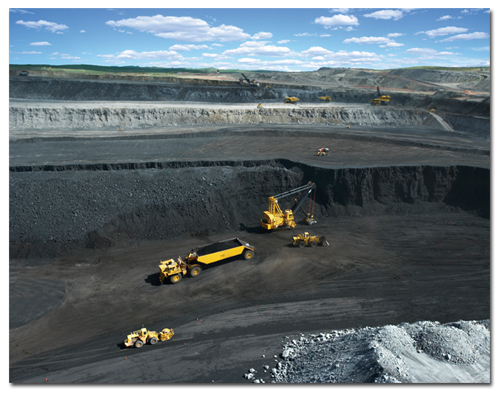
Vast deposits of coal are found all over the world, but they’re not being formed anywhere today. Two centuries of evolution-dominated geology science fails to explain all the many “anomalies” of coal that don’t fit into their gradualistic theories for the formation of coal. That’s because the existence of coal is logically explained by the compression of living plants being ripped up during the Deluge and then squashed together under the thousands of feet of many vast sequences of sedimentary rock layers. When we examine the massive coal beds today, stretching for miles in all directions, we notice zero evidence of soil or roots. Whether the coal layers are dozens of feet thick or just a few inches, we see them neatly layered between pure clay or volcanic ash, with nothing to suggest a quiet stagnant ecosystem. Delicate leaf and flower structures are sometimes preserved with the coal. Sometimes petrified wood is mixed in with the coal too.
And when you start seeing all of this, another question comes up about what we’ve all been taught. Where did the idea originate that the layers of the Earth represent vast ages of time? If those layers formed quickly during a global catastrophe, then the whole geological column starts to fall apart.
At this point, our attention turns to something we’ve all been taught to accept without question: The geological column. Those neat layers of rock, we’re told, represent vast ages of time stretching back millions and millions of years. According to the evolutionist belief, that whole supposition falls apart from the minute you look at the evidence and start asking hard questions.
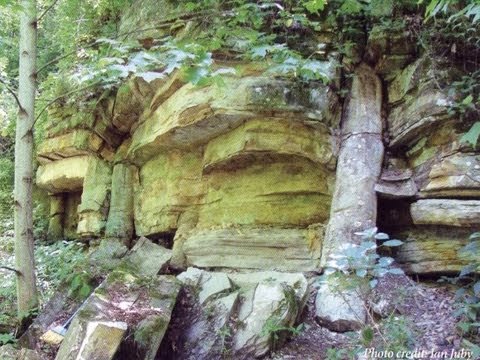
Since the discovery that petrification (called lithification) doesn’t require lots of time, one of the biggest problems is something called polystrate fossils. Many petrified tree trunks are found standing upright, running right through multiple layers of sedimentary rock strata. If each layer really represented hundreds or thousands of years, do you see a problem? Dead trees don’t stand for thousands of years, let alone millions, waiting to be buried in minerals so they can be petrified. But upright polystrate trees are found petrified all over the world. An Alabama coal mine has tree trunks standing straight up through two coal layers. Students are taught those layers formed millions of years apart. The two layers had to form within months, if not hours, of each other. One catastrophic event, not deep time. Then there’s the petrified cowboy boot found in a dry creek bed in West Texas in 1980 with the man’s leg bone still inside it. That detail alone raises uncomfortable questions. If petrification truly required millions of years, something like that shouldn’t exist at all.
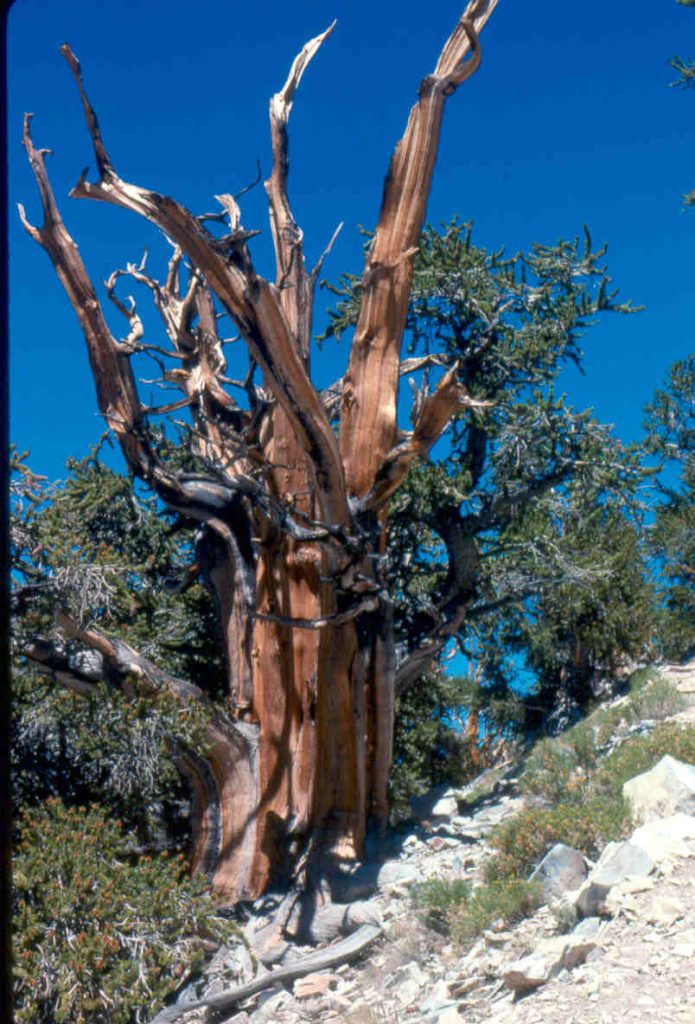
What about living trees? Why isn’t there a single tree older than about 5,000 years? The oldest known trees, are called bristle cone pines. Textbooks tell us they’re around 4,300 years old. That fits easily with the historical timeline of a global flood around 4,500 to 5,300 years ago. If the Earth were truly millions of years old, we’d expect at least one tree far older than that. But there aren’t any. So, when you put it all together, the idea that rock layers represent vast ages starts to look less like science and more like assumption.
The rock layers of our planet make far more sense if they formed quickly under extreme conditions. And once you allow yourself to question that, the evidence doesn’t stop with rocks and trees. It shows up in the oceans, in reefs, in caves, and practically everywhere you look. If you’re willing to open your eyes, the truth keeps making the biblical history of Earth far more sensible than the naturalistic secular idea.
Once you start looking, the evidence is everywhere. Take the oceans for example. Every time it rains, minerals are washed from the land into the sea. That’s been happening non-stop since the Deluge. And today, ocean water is only about 3 to 4% salt. If the Earth were billions of years old, … why isn’t the ocean far saltier than it is? The scripture’s answer is pretty straightforward because the timeline of earth’s history didn’t start billions of years ago. A major event reset it only about 2,000 years after God created it.
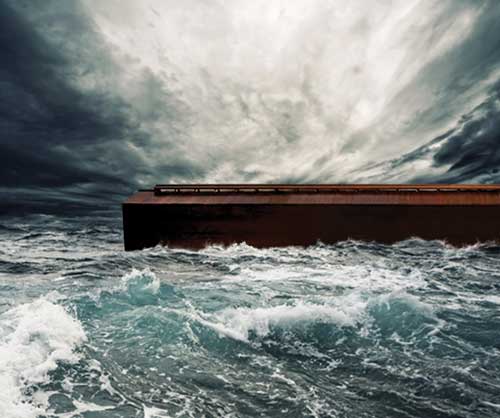
That major event was the Global Deluge… Most people know it as Noah’s Flood, the lengthiest detailed event recorded in the Bible. Maybe it’s more important than you’ve been led to believe.
Jesus of Nazareth is reported by the gospel writers Matthew and Luke to have mentioned Noah as a real man in history. If you take the time to “test all things” (1 Thes 5:21) and let God’s Holy Spirit renew your mind (Romans 12:2) with His Word as your guide to open your spiritual eyes (Ps 119:18), you’ll see why Isaiah wrote (Isaiah 45:11, 12: “Thus says the LORD… It is I who made the earth and created man on it… turn to me and be saved (vs 22).”
Bonus Segment
The more you look into this, the more you see that the rock layers of our planet make far more sense if they formed quickly under extreme conditions. And once you allow yourself to question that, the evidence doesn’t stop with rocks and trees. It shows up in the oceans, in reefs, in caves, and practically everywhere you look. If you’re willing to open your eyes, the truth keeps making the biblical history of Earth far more sensible than the naturalistic, secular idea.
Just to put a spotlight on the credibility of the Genesis account of Noah and the Deluge, let’s never forget the impact of the recorded words of Jesus himself.
In Matthew 24:37–39, Jesus compares the days before the Flood to the coming of the Son of Man, stating:
“For as in the days before the flood, people were eating and drinking, marrying and giving in marriage, up to the day Noah entered the ark; and they knew nothing about what would happen until the flood came and took them all away. That is how it will be at the coming of the Son of Man.”
Similarly, in Luke 17:26–27, Jesus says:
“Just as it was in the days of Noah, so also will it be in the days of the Son of Man. People were eating, drinking, marrying, and being given in marriage up to the day Noah entered the ark. Then the flood came and destroyed them all.”
The historic record of God’s verbal interactions with Noah and his preparation of the Ark, along with the meticulously detailed account of the year-long Flood event, was all recorded first in the book of Genesis as written by Moses. He wasthe great grandson of Levi, who was the great grandson of Abraham.
Moses’ ancestry traces back to Abraham through a direct line of descent, with key generations as follows:
- Abraham (covenant patriarch)
- Isaac (son of promise)
- Jacob (Israel) (son of Isaac, father of the 12 tribes)
- Levi (third son of Jacob; ancestor of the Levite tribe)
- Kohath (son of Levi; progenitor of the Kohathite clan)
- Amram (son of Kohath; father of Moses and Aaron)
- Moses (prophet and leader of the Exodus)
Jesus clearly believed and taught that this recorded history in Genesis was truthful and factual. He endorsed it as pivotal to the faith of His disciples when He told the story of Abraham’s discussion with the rich man in Hades. Jesus quoted Abraham, saying to the rich man:
“If they do not listen to Moses and the Prophets, neither will they be persuaded if someone rises from the dead.” Luke 16:31.
Do you think the point is clear enough? Is God speaking to us that the whole story of Noah and the Flood is real history?
Peter, the apostle of Jesus, also spoke of Noah and the Flood as genuinely real history. He wrote that God…
“did not spare the ancient world, but preserved Noah, a preacher of righteousness, with seven others, when He brought the flood upon the world of the ungodly.”
2 Peter 2:5
The Bible has many references to the idea of seeing God’s awesome works, studying them, meditating on them and telling others about them. Certainly, God’s works include the things we’ve talked about here today.
“Come and see the works of God. He is awesome in His deeds toward the sons of men.”
Psalm 66:5
The Bible also has many passages that raise our attention to the chief obstacle preventing us humans from personally experiencing the full confidence of relationship with our Creator as our Heavenly Father. Do you know what that chief obstacle is?
It’s the deception of foolish speculations offered by the natural reasoning of the world that refuses to surrender to the Lordship of Christ.
Paul says it plainly.
“For even though they knew God, they did not honor Him as God, or give thanks; but they became futile in their speculations, and their foolish heart was darkened.”
Romans 1:21
Paul also wrote plainly how it’s absolutely vital that God’s children never turn away from the ‘love of the truth.’ He warns how our arch enemy, called Satan, actively works…
“…with all the deception of wickedness for those who perish, because they did not receive the love of the truth so as to be saved. And for this reason, God will send upon them strong delusion so that they might believe what is false.”
2 Thes 2:10-11
A basic English version says: “And for this cause, God will give them up to the power of deceit and they will put their faith in what is false:”
Can you see how serious for the human soul deception is, in light of eternity?
The truth of Noah’s Flood is absolutely pivotal to God’s overall message of salvation in Jesus Christ. All this discussion about evidence to support the fact of that event… is part of the spiritual warfare against the lies of the enemy that keep people apart from Christ. Why is it so important?
Evolution-based Humanism is not just the core philosophy of ‘secularism.’ It’s idolatry… putting an idol in the place of God, our Creator! And the core ‘prop’ supporting evolution in the minds of billions of humans is the often-repeated timeline of millions of years – otherwise known as “deep time.” It’s all built on an imaginary ‘house of cards’ and intimidation from authoritative experts. They require us to believe their complicated fairy tale on pure faith in their word. They’re the experts. What do we know? Their convoluted interpretation of scientific evidence is rarely questioned in the mainstream. That’s why we’re at the crossroads of a much deeper issue… all because we dare to question their timeline. And we’re not just challenging their interpretations of geology. We’re challenging the whole evolutionary make-believe scheme that they revere like a religious shrine.
The Apostle John reminds us that “God is spirit and those who worship Him must do so in spirit and in truth” (John 4:24).
Spiritual reality can’t be grasped through tradition, culture, or intellect alone. It has to be spiritually discerned. That’s why many people call themselves Christians but don’t actually know God. It becomes outward religion, rules, habits, labels without inner transformation. And without that spiritual rebirth, the things of God don’t make sense. They feel foolish, easy to dismiss.
As 2nd Corinthians explains, the god of this world has blinded the minds of unbelievers so they can’t see the light of Christ.
“In whom the god of this world hath blinded the minds of them which believe not, lest the light of the glorious gospel of Christ, who is the image of God, should shine unto them.”
2 Co 4:4
Life is short. Over 8,500 people die every day in the US. That’s 6 every minute… one every ten seconds… almost 360 each hour. One of these days, it’ll be you. Every second that passes brings you closer to eternity. God’s Spirit is reminding you that you have today to decide to surrender to Him while you still can.
“Seek ye the LORD while he may be found, call ye upon him while he is near”
Isa 55:6
But He doesn’t give you a halfway solution.
“And you will seek Me and find Me, when you search for Me with all your heart.”
Jer 29:13
Not halfway. Not casually. With all your heart.
God isn’t far off. He made the world. He formed every nation from one man and set the boundaries of where people would live so they might seek him and find him.
“And He has made from one blood every nation of men to dwell on all the face of the earth, and has determined their pre-appointed times and the boundaries of their dwellings, so that they should seek the Lord, in the hope that they might grope for Him and find Him, though He is not far from each one of us.”
Act 17:26 – 27
If you’re listening to this and you haven’t yet made a clear and lasting decision to accept God’s invitation to surrender to Him as your Master, don’t wait. Exchange your self-made god for the Only Creator God Who will judge the works of every human who has ever lived… There’s only one reason to wait until tomorrow for a decision like this. It’s called delusional ‘pride.’
That’s why Isaiah goes on to say…
“Let the wicked forsake his way, And (let) the unrighteous man (forsake) his thoughts; Let him return to the LORD, And He will have mercy on him; And (return) to our God, For He will abundantly pardon.”
Isaiah 55:7-8
It’s called repentance… seriously turning your direction in life around… accepting His merciful favor… When we do that with our whole heart… everything changes.
As Paul and Silas said to the Philippian jailer in Acts 16:31…
“Believe on the Lord Jesus Christ, and you will be saved…” [that is, to adhere to, trust in, and rely on Jesus as Christ and Savior]
By God’s amazing grace and forgiveness, your eternity will then be set to be with your Creator and Savior.
Scripture support for how the Holy Spirit opens our spiritual eyes through God’s Word
Ephesians 1:18 connects the Word of God with the Holy Spirit opening our spiritual eyes, as it states: “I pray that the eyes of your heart may be enlightened, so that you may know the hope of His calling, the riches of His glorious inheritance in the saints.” This enlightenment is achieved through the Holy Spirit, who works in conjunction with Scripture to grant spiritual understanding.
The Holy Spirit is the primary agent through which God opens our eyes to perceive spiritual truths. As John 16:13 says, “When the Spirit of truth comes, he will guide you into all truth.” The Spirit does not operate apart from the Word but uses it as the instrument of revelation. Psalm 119:18 directly calls for divine illumination: “Open my eyes, that I may behold wonderful things from Your law,” showing that the Word of God is the content to be seen, and the Holy Spirit is the one who enables the seeing.
Furthermore, 1 Corinthians 2:10–12 confirms that “God has revealed them to us through His Spirit,” and that the Spirit searches the deep things of God. The Spirit teaches us through Scripture, interpreting its meaning and making it known to believers. Luke 24:45 records Jesus opening the disciples’ minds so they could understand the Scriptures — a clear example of the Holy Spirit working through the Word to grant spiritual sight.
Thus, the Word of God and the Holy Spirit are inseparable in opening spiritual eyes: the Word is the content, and the Spirit is the illuminator.